40 conversation starters for family dinner that actually get kids talking
Tired of “fine” and “nothing”? 40 conversation starters for family dinner, sorted by age, plus simple ways to turn questions into games kids want to play.
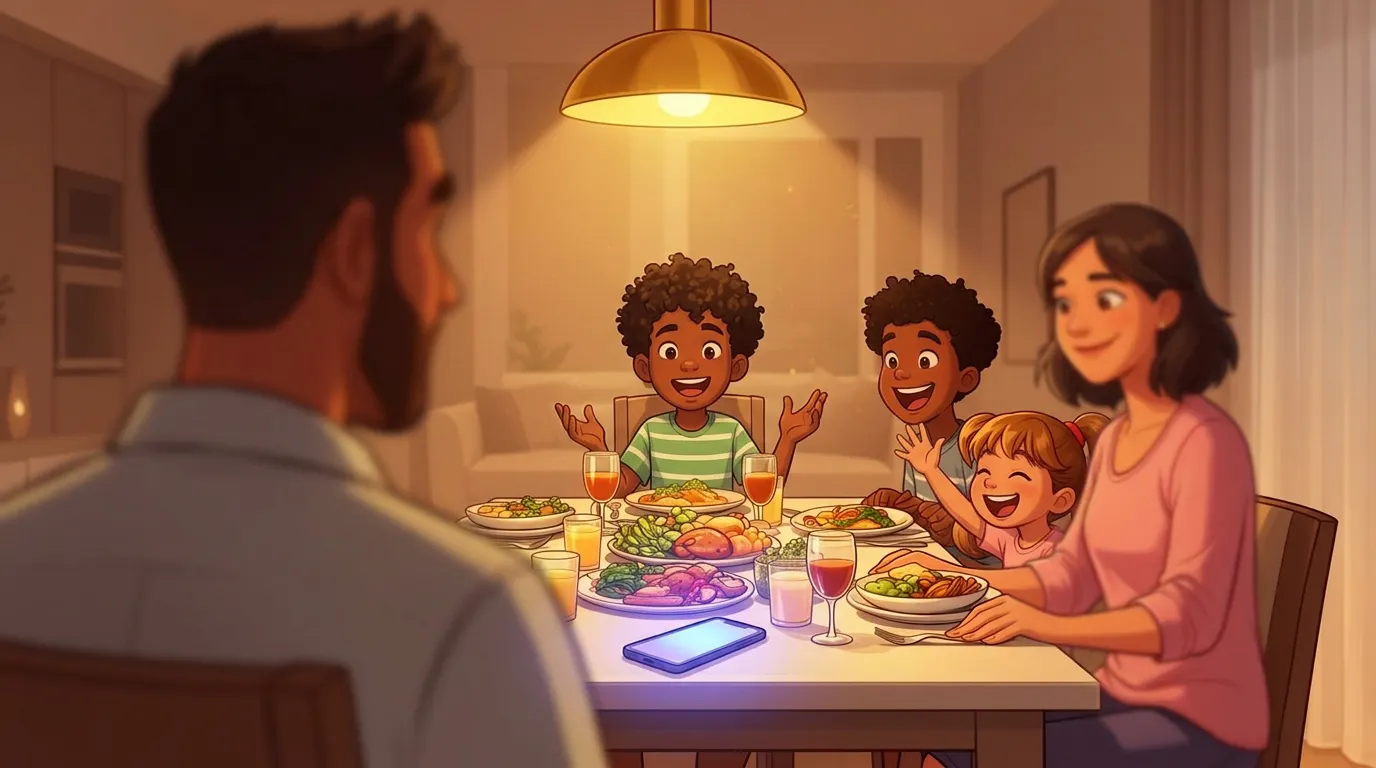
"How was school?" "Fine." "What did you do?" "Nothing."
Most parents know this exchange by heart. The problem is rarely the child: it's the question. It is too big, it comes at the end of a long day, and it sounds like a report to fill in. The good news is that a few small changes in what you ask and how you ask it can change the whole meal.
Below are 40 conversation starters for family dinner, sorted by age, followed by the tricks that make them work.
Why "How was your day?" doesn't work
A good dinner question has three qualities:
- It is specific. "What made you laugh today?" is easier to answer than "How was your day?" because the child only has to find one moment.
- It is open. It can't be answered with yes, no or fine.
- It is a little playful. Imaginary questions ("If our dog could talk…") lower the pressure: there is no wrong answer.
And one more rule that matters as much as the question: parents answer too. If adults only ask, dinner feels like an interview. If they share their own funny moment or their own small failure, children follow.
Conversation starters for little kids (4–6)
- What was the funniest thing that happened today?
- If you could have any animal as a pet, which one would you pick and why?
- Who did you play with today? What did you play?
- If you were a superhero, what would your power be?
- What would you put in the best sandwich in the world?
- What sound does your favourite animal make when it's happy?
- If your cuddly toy could talk, what would it say about today?
- What is something you did all by yourself today?
- If you could fly, where would you go first?
- What should we cook together this weekend?
Conversation starters for kids (7–11)
- What is one thing you learned today that surprised you?
- If you were the teacher tomorrow, what would you teach?
- What was the hardest part of your day, and the best part?
- If you could invent a machine to solve one problem, what would it do?
- Who was kind to you today? Were you kind to someone?
- What is a rule you think is unfair — and what would you replace it with?
- If you could spend one day as any character from a book or a game, who would you be?
- What would you do with a whole day and no plans?
- What is something you are proud of this week?
- If our family had a motto, what should it be?
Conversation starters for teens (12–17)
Teens rarely enjoy being questioned at dinner, but most enjoy a good argument, a puzzle or a chance to be the expert. Ask for their opinion, not for a report.
- What is a song, game or show everyone should know about right now? Convince us.
- What is an opinion you hold that most people your age don't?
- If you could change one thing about school, what would it be?
- What is something online you saw this week and weren't sure was true?
- Which adult (real or fictional) would you like to have dinner with, and what would you ask them?
- What skill would you like to be really good at in five years?
- What is a rule in our house you would negotiate if you could? Make your case.
- What is the best piece of advice you've ever been given?
- What is something adults get wrong about people your age?
- If you had to explain your favourite game or sport to your little brother or sister in one minute, how would you do it?
Conversation starters for the whole family
These work with every age at the table — and they are a good way for parents to share stories too.
- What are three good things that happened today, big or tiny?
- Would you rather be able to talk to animals or speak every language? Why?
- What is your favourite family memory?
- When you were my age, what did you do after school? (for parents and grandparents)
- If we could go anywhere together next holiday, where would we go?
- What is a small thing someone at this table did this week that you appreciated?
- What is the strangest food you have ever tasted?
- If our family were a team, what would our team name be?
- What is something you would like to try together this month?
- What is one thing you are looking forward to?
How to make the conversation last
A list of questions is a good start, but what makes dinner feel like a conversation is what happens after the first answer.
- Ask one follow-up question. "What happened next?" or "Why do you think she did that?" tells the child you were really listening.
- Give everyone a turn. Go around the table so the quiet one isn't drowned out by the talkative one. Names help: "Lina, what about you?"
- Let the children choose the topic sometimes. A child who talks about their favourite dinosaur for five minutes is practising exactly the skills you hoped for.
- Don't correct, don't lecture. If an answer opens a "teaching moment", save it for later. At the table, the goal is that they want to talk again tomorrow.
- Stop while it's fun. Two or three good questions are better than ten that feel like homework.
Turn questions into games
Children who sigh at questions will often jump at a game. A few dinner-friendly formats:
- Would you rather… and why? Each player invents a question for the next person — the "why" is where the conversation happens. → 100 would you rather questions for kids
- The story chain. One sentence each, building a story together about a hero the children choose. → 60 story starters for kids
- Family news. Each player presents a piece of news from their own day like a TV presenter, with a funny headline. → Questions to ask your kids about their day
- Three good things. Everyone shares three good things from the day, with one detail each. → Gratitude questions for kids
- Hot take court for teens: defend a hot take on anything you love, and a "judge" asks for evidence. → Debate topics for teens
- When I was your age. The children pick a theme and a parent or grandparent tells a true story about it. → Questions to ask your parents and grandparents
Let Kalmdix host
If you would rather sit back and enjoy the meal, Kalmdix can host for you. Put your phone on the table, choose a game, and Kalmdix explains the rules, gives turns by name and keeps things moving — the players choose the subject. You can browse all the conversation games by age.
Frequently asked questions
What are good conversation starters for kids at dinner?
Questions that are specific, open and a little playful work best: "What made you laugh today?", "If you could invent a machine, what would it do?", "What are three good things that happened today?". Answer them yourself too, so it feels like a conversation rather than an interview.
How do I get my teenager to talk at dinner?
Ask for their opinion or their expertise rather than a report on their day, and let them choose the topic. A light debate, a "convince us" question or a game often works better than direct questions.
How many questions should we ask during a family meal?
Fewer than you think. Two or three good questions with real follow-ups make a better conversation than a long list. Stop while everyone is still enjoying it.
Bring Kalmdix to your next family dinner
Put your phone on the table and tap Start: Kalmdix hosts the conversation, gives everyone a turn and keeps it fun. Plans from €9.99 a month, cancel anytime.
About the author
The Kalmdix team — Kalmdix. The people behind Kalmdix, the AI voice companion that sparks conversations and teaches good manners through play at the family dinner table.