6-year-old behavior problems: what's normal, what's not, and what helps
6 year old behavior problems: what's normal in first grade, why kids explode at home, exact words for anger, losing and bedtime, and when to worry.
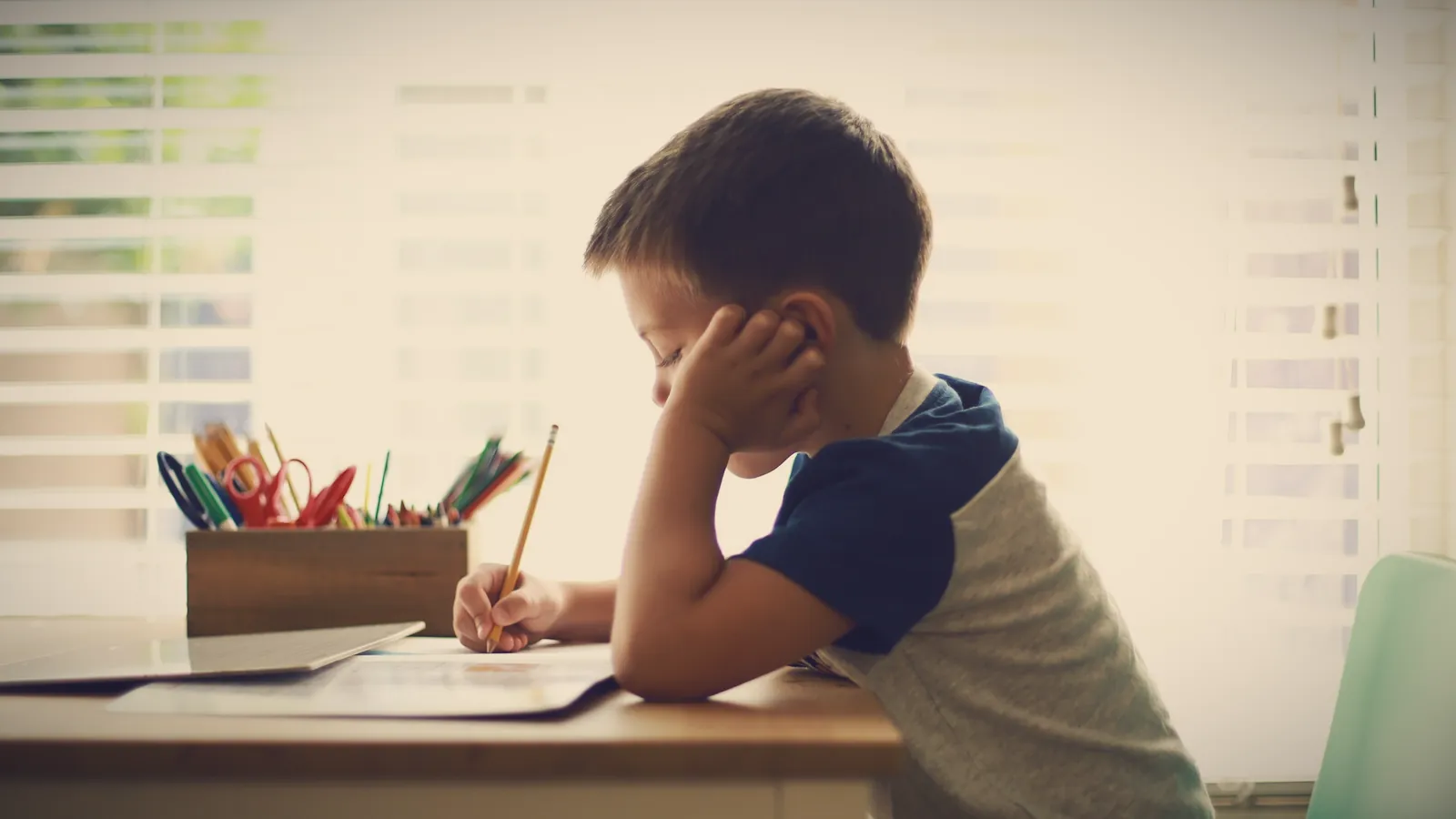
At school, your six-year-old sits on the carpet, raises a hand and waits in line. At home, the same child screams because a sister got the blue cup, calls you "the worst mom in the world" and turns every bedtime into a negotiation. You might be wondering where your easy kid went.
If "6 year old behavior problems" is what you typed once the kids were finally asleep, here's the short version: much of this is typical in first grade, it lands on you because you're safe, and some words work better than others. Below you'll find them for each tough moment, plus the signs worth a call to the doctor.
What's normal for a 6 year old?
The American Academy of Pediatrics' 6-year checkup guide says that by age 6, most kids "begin to have deeper thoughts and emotions". Where full-day kindergarten isn't required, first grade may also be the first time your child is in school for more than 6 to 8 hours at a stretch.
Much of what wears you out is typical at six:
- Calm at school, falling apart at home.
- Anger aimed at Mom, or whoever does most of the caring.
- Hating to lose. A board game can end in tears or a flipped board.
- "That's not fair!" Who got more, who went first.
- Rule police. Strict about everyone else's rules, flexible about their own.
- Crumpling at correction. "Try that letter again" sounds like "you're bad at everything".
- Bedtime fury. Tired, wired and angry about everything.
The line to watch: behavior that puts someone at risk, shows up nearly every day, or keeps growing over several weeks.
Why 6 year old behavior can get harder in first grade
- Long days of sitting and following rules. Lining up, raising hands, waiting. By pickup, their self-control is spent.
- Big thoughts, small brakes. They can see that something is unfair long before they can calmly say so.
- Comparing starts. Who reads faster, who got picked first. That stings, and it comes home.
- Wanting to be big. The same AAP page notes that six-year-olds try to prove they're grown up, and that boundaries still matter.
- Less rest. Early starts and busy afternoons shorten anyone's fuse.
6 year old behavior issues at home, but fine at school
Your child spends the day being a good first grader, then lets go where it feels safest: with you. That's trust, not a verdict on your parenting, though it still needs limits. For the first half hour after school, think food, quiet and few demands. Why kids act out only at home has a full evening plan.
- Say: "You've been a first grader all day. Now you can just be you."
- Say: "No questions yet. Crackers or apple?"
- Say: (later, on a calm day) "You often feel grumpy after school. What would help that first hour?"
If the teacher reports 6 year old behavior problems at school instead, compare notes first. The AAP says big feelings about school are worth raising with your pediatrician too.
6 year old anger outbursts and tantrums
Yes, 6 year old tantrums still happen, especially when a child is tired or hungry. Mid-storm, lessons bounce off. Aim for safety and a low, slow voice.
- Say: "I'm moving the chair so nobody gets hurt."
- Say: "This is a big storm. Storms end. I'll be right here when it does."
- Say: (once the peak has passed) "I can't understand screaming. Use your talking voice and I'll listen."
Afterwards, look for the trigger together. Say: "Let's be detectives. What happened just before the storm started?" When your 6 year old's behavior is out of control nearly every day, the step-by-step plan for an out of control child can help.
"Why is my 6 year old so angry at me?"
When a 6 year old is angry at Mom, it's usually not personal, even when it's loud. You're the safest person, and the one who asks for most things: shoes, homework, bath, screens off. More requests, more pushback.
- Say: "Being mad at me is allowed. Calling me names isn't. Tell me what you're mad about."
- Say: "You wanted Dad to do bedtime. Tonight it's me, and I do the best dragon voice."
- Say: "Worst mom ever, huh? You're really disappointed about the park. I get it. The answer is still no."
There's no need to defend your parenting to a furious six-year-old, or to punish the feeling. The AAP points out that six-year-olds still learn a great deal of their emotional skills from their parents, and that your patience and kindness help them handle new feelings. If the anger shows up everywhere, not just with you, why is my child so angry has a checklist of causes.
Hates losing, and "That's not fair!"
The AAP's page on competition and cheating says children learn that losing is bad, and that in the early school years "their wish to do well is very strong". It also notes that kids tend to set their own rules when a game is too hard for them.
- Say: (before you start) "Quick plan: what will you do if you win? What will you do if you lose?"
- Say: "You really wanted that one. Losing stings."
- Say: "Rematch tomorrow, or a different game now?"
For the rule police: Say: "Thanks for knowing the rule. I'll look after your brother's turn. You look after yours." For "not fair": Say: "Tell me what feels unfair. I'm listening."
The same page suggests family games where chance is involved, which can teach children to compete without cheating. When dice decide, losing isn't a verdict on anyone.
When your 6 year old can't take criticism
Many six-year-olds hear any correction as a judgment on who they are. The Child Mind Institute advises against brushing off a child's frustration with "It's okay, you'll do better next time". Acknowledge the disappointment instead, and let them see how you handle your own.
Correct one thing at a time, privately, starting with what's working.
- Say: "Your sentence makes sense. Let's fix this one word together."
- Say: "I'm not upset with you. I'm just showing you one thing."
- Say: "I mixed up the days and we missed swimming. Annoying! Next week I'll write it down."
More ideas in taking responsibility without shame.
6 year old angry at bedtime
Bedtime is where the day's leftovers come out: a mean comment at recess, a worry about tomorrow, plain tiredness. A predictable routine and screens off well before bed help.
- Say: "Your body is tired and your feelings are big, so everything feels terrible right now."
- Say: "Tell me one thing that bugged you today and one thing that was good. Then lights out."
- Say: "I'll be in the hallway folding laundry. You'll hear me."
6 year old behavior through the year
Starting first grade
The first weeks are often the hardest, so lower the bar at home for a while. The AAP suggests talking with your child about what school days will look like and listening to their worries. If your child still seems closer to five, see the 5-year-old behavior guide.
Settled into school
Friendships and comparisons take center stage, and losing, fairness and rule-policing often peak. Practice with low-stakes games, and talk about friends on calm evenings.
Nearly 7
Your child can reason more and help solve problems. Bring them in: "Bedtime keeps going badly. What's your idea?" For what comes next, see 7-year-old behavior problems.
Over the next few weeks
- Short, regular one-on-one time. Their pick of activity, your full attention, phone away.
- Protect sleep and after-school downtime.
- A weekly family game. Chance games first, then a little skill.
- Real ways to be big. A job that's truly theirs, like feeding the cat.
- Notice effort out loud. "You were cross about losing, and you still said good game."
- Agree on two or three house rules. Keep consequences small and calm; how to discipline a child walks through it.
What to avoid
- Teasing them for being a "sore loser".
- Letting them win every time, or never.
- Correcting them in front of siblings or friends.
- Taking "I hate you" literally.
- Holding up a classmate or sibling as the example.
When to talk to your pediatrician about 6 year old behavior problems
Most of this comes with being six. Still, check in with your pediatrician or family doctor if:
- someone often gets hurt, things often get broken, or your child hurts themselves;
- the blow-ups are close to daily, drag on, or have been growing for several weeks;
- the teacher reports ongoing trouble, your child seems to be falling behind, or other kids often leave them out;
- your child often says they're stupid or bad, or seems sad, worried or irritable most of the time;
- sleep, eating or getting to school has become a daily battle;
- they can no longer do things they managed before, or the whole family is tiptoeing around them.
This list is a reason to ask, not a diagnosis. Your doctor can check sleep, hearing, vision and learning, and look for anything else making the days harder. If someone's safety is at risk right now, call emergency services.
Practice losing (and taking turns) at the dinner table
Six-year-olds learn to lose, wait and accept a "no" when they're calm, and dinner comes back every day. The AAP's checkup guide says mealtimes should be social, without cell phones and TV competing for attention. Try a game with tiny stakes, like replay the scene: the family replays a small moment, such as losing a game, with roles swapped.
Kalmdix runs games like this by voice. A phone sits on the table, someone taps Start, and it calls on each person by name, so nobody grabs every turn. Pick one habit in Educate and the kids get it as a playful five-meal mission, with no one singled out for missing it. You can also set a private goal for yourself, like praising the effort, not the result, which Kalmdix never mentions at the table. It's not therapy and doesn't stand in for you; it's a short, low-stakes daily moment to practice.
Frequently asked questions
What is normal behavior for a 6 year old?
Falling apart after a long school day, being angriest with the parent they feel safest with, hating to lose, shouting 'that's not fair' and taking correction hard are all common at six. Many children are also adjusting to longer days of sitting and following rules in first grade. If it's dangerous, nearly daily or getting worse over several weeks, mention it to your pediatrician.
Why is my 6 year old so angry at me?
Usually because you're their safest person and also the one who makes most of the daily requests. Children often save their biggest feelings for the adult they trust most. Allow the anger, stop the name-calling, keep your limits calm and short, and share the hardest moments, like bedtime or homework, with another adult when you can.
Why is my 6 year old good at school but bad at home?
First grade asks for a lot of self-control: sitting, waiting, raising hands, following group rules. Many children use it all up at school and let go once they're home with you. A snack, quiet time and few questions straight after school usually help, along with clear, calm limits.
When should I worry about my 6 year old's behavior?
Talk to your pediatrician or family doctor if someone often gets hurt, outbursts happen most days or are getting worse over several weeks, your child seems sad or worried most of the time, or the school reports ongoing trouble. Asking early isn't overreacting, and it isn't a diagnosis: it lets the doctor check sleep, hearing, learning and anything else that may be making things harder.
Bring Kalmdix to your next family dinner
Put your phone on the table and tap Start: Kalmdix hosts the conversation, gives everyone a turn and keeps it fun. Plans from €9.99 a month, cancel anytime.
About the author
The Kalmdix team — Kalmdix. The people behind Kalmdix, the AI voice companion that sparks conversations and teaches good manners through play at the family dinner table.